If you spend any time near a burning table or a humming gantry in a metal fabrication shop, you learn quickly that thick plate makes its own rules. Steel over 1 inch, let alone 3 or 4 inches, asks hard questions of heat, tooling, and fixturing. What looks straightforward on a print can local steel fabricator services unravel on the floor if you treat heavy plate like thin sheet. I have burned, milled, drilled, and straightened a lot of it in a Canadian manufacturer’s environment, from underground mining equipment frames to food processing equipment bases, and the best days happen when planning anticipates the physics.
This piece shares practical strategies for CNC metal cutting of thick plate, with a focus on trade-offs between plasma, oxy-fuel, waterjet, laser, and mechanical machining. It touches on tool life, heat-affected zones, sequencing, and tolerance control that supports build to print work. Whether you run a custom metal fabrication shop serving mining equipment manufacturers, or a small cnc machine shop doing precision CNC machining for an industrial design company, the same fundamentals apply: respect heat, control stiffness, and think two steps ahead of the last pass.
Thickness drives the decision tree
Think of thickness in brackets, not absolutes, and keep an eye on the material grade. A36 at 2 inches behaves very differently than quenched-and-tempered alloy plate of the same size. Below half an inch, high-definition plasma and fiber laser do wonderful work. Between 0.5 and 2 inches, plasma and waterjet carry much of the load. Above 2 inches, oxy-fuel and waterjet become primary, with fiber laser occasionally in the picture up to roughly 1.5 to 2 inches depending on power, nozzle, and gas. Mechanical milling has a role whenever edges need to meet tight tolerances or finish requirements that thermal cuts cannot hit economically.
For a steel fabricator handling 3 to 6 inch plate, oxy-fuel is still the backbone because speed scales reasonably with thickness and consumables are accessible. Waterjet is the dimensional ace, especially where heat is unwelcome, but it pays for its precision with slower rates and higher hourly cost. CNC metal cutting, in this context, often means using the right machine for the roughing and leaving the cnc machining shop to bring edges and holes into spec through finish machining.
Plasma on thick plate: choose the right battles
High-definition plasma can cut carbon steel cleanly up to 2 inches in many shops. Beyond that, edge quality drops, kerf narrows, and slow travel magnifies dross and bevel error. Plasma shines when you need good productivity and acceptable edge finish for weld prep on 1 to 1.5 inch steel. If your manufacturing shop builds heavy custom machines or structural frames, plasma is often your fastest path to net shape for webs, gussets, and brackets in this range.
Several details separate good thick-plate plasma work from the scrap bin. Pierce technique matters because pierces are the most abusive part of the cycle. Staged piercing, with a pre-heat and angular pierce, keeps molten metal away from the nozzle. Consumables wear increases with thickness, so budget for lower pierces per set. On 1.5 inch mild steel, you might see only a few dozen pierces before quality falls off. If your part has a forest of small holes, think twice. It may be better to plasma the profile and leave the holes for drilling or CNC precision machining. Lead-in length, corner loops, and intermittent cut strategies help minimize heat buildup that pulls parts out of flat.
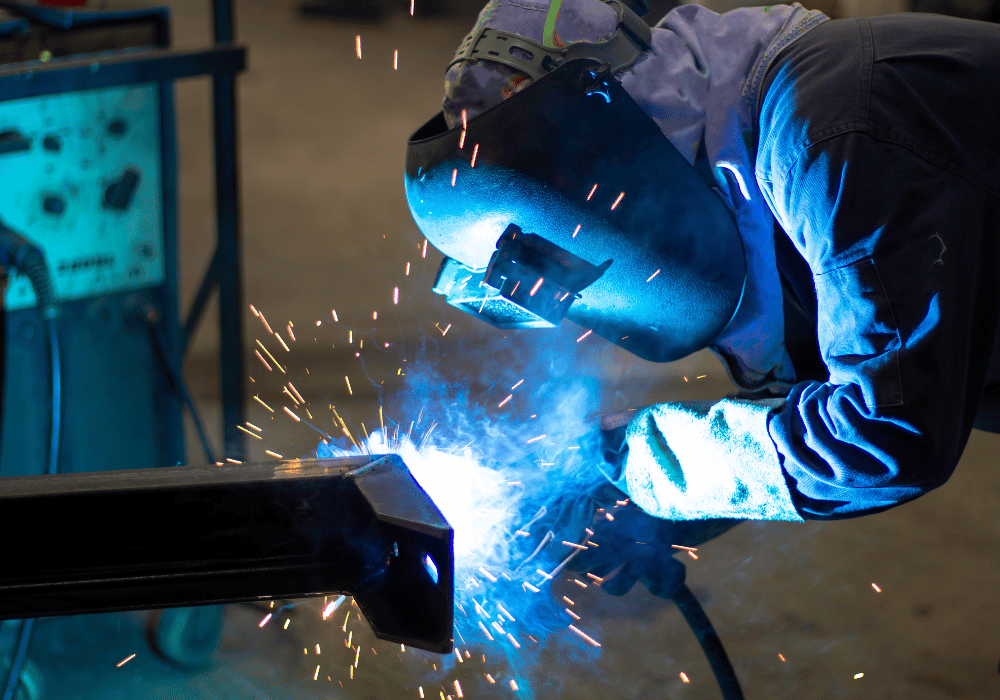
When tolerance gets tight, plan to machine. Plasma can hold ±0.02 to ±0.06 inch on good days in the 1 inch region, but kerf-angle variation and heat-affected zones complicate tapped holes or tight-slot assemblies. If the part is headed to a cnc machining services team anyway, let plasma rough near net shape with a machining allowance of 0.04 to 0.12 inch depending on part size and flatness needs. That allowance lets a machining manufacturer remove the HAZ, square the edge, and hit fit-up dimensions without fighting hard skin or taper.
Fiber laser: thick limits and when it helps
Fiber lasers over 8 kW have made incredible strides in thick plate, but the economics still tilt to plasma or oxy-fuel as thickness rises. For carbon steel up to roughly 1 inch, fiber laser delivers crisp edges and small HAZ while maintaining high speeds. Between 1 and 2 inches, you can cut, but expect slower travel, risk of dross, and more finicky parameters. Above that, most shops yield to oxy-fuel or waterjet unless surface finish and tight geometry justify the time.
Where fiber laser can shine on thick plate is in small features that plasma struggles with. A Canadian manufacturer serving industrial machinery manufacturing might laser cut slots or intricate pockets in 0.75 to 1 inch plate that would come out ragged on plasma. The caveat is pierce reliability and cost per hour. With careful gas selection and nozzle standoff, laser can deliver holes that need only a quick ream. For anything heavier, assume you will still be visiting the drill press or a CNC mill.
Oxy-fuel: the workhorse for 2 to 12 inches
Oxy-fuel exists for thick plate. Once you accept the pace, it delivers reliable kerf geometry and consistent metallurgy on low- and medium-carbon steels. I have run 3 inch base plates for logging equipment with clean edges and minimal taper that fit directly into weld fixtures. The trade-off is wider HAZ than plasma and significant heat input that can warp thin webs adjacent to heavy sections.
Good oxy-fuel outcomes depend on torch setup and preheat discipline. Tip size, oxygen purity, and preheat flame shape must match thickness. If the oxygen stream is not laminar, the kerf grows inconsistent and slag hangs up. A torch test cut at the start of a shift pays for itself. When making a nest for a custom steel fabrication job, leave enough web between parts to shed heat. A rule of thumb that works in many shops is one plate thickness of web between cuts when you exceed 2 inches, then increase spacing for long continuous contours.
For precision, oxy-fuel still needs help from machining. Leaves 0.06 to 0.125 inch per side for edges that will be milled, and more if the part will be stress-relieved before machining. Where tapped holes land in oxy-fuel HAZ, drill oversize first, then ream or mill after removing the hard layer. If you must tap directly, use a strong cutting oil, go slow, and chase with a bottoming tap to break any case-hardness lip.
Waterjet: when heat is the enemy
Waterjet cuts almost anything, from mild steel to Inconel, with no heat-affected zone. That makes it ideal for the high-strength steels and wear plates used in underground mining equipment suppliers’ builds, or for stainless bases in food processing equipment manufacturers’ lines where you want clean edges and minimal metallurgical change. It is also the slowest and often most expensive approach per hour. That does not mean it is uneconomical. If you save two machining setups because the edge comes off the table within ±0.005 to ±0.010 inch, waterjet may be the cheapest path overall.
On thick plate, waterjet’s enemy is taper and time. Taper compensation heads can hold impressive tolerances up to 2 inches and still do good work beyond that with slower speeds. Abrasive use climbs with thickness, so monitor garnet quality and feed rates. For 3 inch armor steel, we have run cutting speeds as low as a few inches per minute with multiple quality passes to meet a build to print profile tolerance of ±0.010 inch. Not fast, but faster than hogging 0.25 inch off a hardened edge on a mill later.
Waterjet is also a strong pre-machining tool. For a CNC metal fabrication shop tackling complex 3D parts from plate, waterjet can rough blanks near net shape. You remove less material on the machining center, gain better clamping options, and avoid hard HAZ skin. If you are making machinery parts manufacturer components with deep pockets, consider waterjet to free the outline and then finish on a vertical mill with solid carbide shell mills or indexable face mills that deal nicely with varying engagements.
Combining processes for cost and quality
Most thick-plate success stories use at least two processes. A common pattern is oxy-fuel or plasma roughing for speed, then precision CNC machining to spec critical interfaces. Another is waterjet roughing for materials that hate heat, with a light machining skim. A steel fabrication shop that serves mining equipment manufacturers might keep a plasma table and a mid-size CNC machine shop under the same roof to avoid waiting days between ops.
An example from our floor: a 2.5 inch A36 base plate for a custom machine required true position on ten 1 inch holes within 0.005 inch relative to the perimeter, plus two datum edges square within 0.002 inch per foot. We oxy-fuel cut the blank with 0.125 inch excess, then rough milled the two edges, stress-relieved the plate overnight, and finish milled edges with a 6 inch indexable cutter at a shallow axial depth, high feed to avoid pulling stress back in. Holes were drilled undersize through a hardened portable bushing, then finish bored on a horizontal mill. The oxy-fuel time was under an hour, machining under two. If we had waterjetted the plate to near net, machining time would have dropped, but lead time and hourly cost would have risen. The right answer hinged on our queue and the tolerance stack.
Taming heat-affected zones and residual stress
Thermal cutting builds a HAZ with harder microstructure, especially in higher carbon steels. That outer band might be only a few thousandths on thin plate but can run 0.02 to 0.06 inch on thick sections. You feel it when an end mill chatters along the edge even though the interior machines like butter. The simple fixes are to leave an allowance, use sharp tools with a tough grade, and take a first pass that breaks through the skin. On roughing, climb milling with consistent chip thickness helps carry heat into the chip rather than the tool.
Residual stress is the hidden saboteur. When you remove a large portion of plate, the remaining shape can open, twist, or dish. Large rectangular frames cut from heavy plate tend to curl once the internal stress redistributes. Sequencing cuts can help. When plasma cutting, alternate sides and let parts cool naturally before releasing tabs. On oxy-fuel, break long contours into segments with short pauses to stabilize temperature. In a custom fabrication job with multiple windows in 2 inch plate, we kept at least 0.75 inch of bridge material between windows until the last pass, then came back to free the web. The final contour stayed flatter, which saved us an hour of straightening at the press.
For parts that will be machined critically, consider stress relief. Normalizing or a low temperature stress relief cycle before finish machining flattens the fight. The energy bill is not trivial, but if your cnc precision machining team fights every setup with shims and clamps, the furnace wins in the long run.
Fixturing and workholding that respects mass
Thick plate acts like a heat sink. That is good for cutting stability and bad for predictable movement when only one section is heating. On a burning table, use robust slats and avoid cut paths that pass repeatedly over the same slat to reduce secondary heat reflection. For waterjet, ensure adequate support pucks to keep heavy parts from sagging into the tank as they separate. I have seen a 4 inch ring drop and wedge mid-cut because two supports were a hair off line.
In machining, thick plate wants rigid, broad contact. Vacuum is out, magnets can work on clean, flat surfaces but must be paired with mechanical stops, and clamps should carry load to the table rather than bow the part. For large base plates in a cnc machining shop, I like to bolt to a subplate with through-holes and heavy washers, then add step blocks that butt rather than pull. If the part is asymmetrical, shim to level stress before tightening. Touch off after clamping, not before, and recheck Z after a roughing pass. You will save yourself from chasing a crooked plane.
Tooling for edge cleanup and holemaking
Edge cleanup on thick plate differs from hogging bar stock. You often deal with near net profiles, skin layers, and discontinuous cuts. For edges with a plasma or oxy-fuel allowance of 0.06 to 0.12 inch, a 45-degree face mill or high-feed mill set to a shallow axial cut can shear off the hard layer and establish a straight wall. Indexable end mills in the 2 to 4 inch range with positive rake inserts handle variable engagement better than small solid carbide, particularly when you hit an edge with taper. Keep runout tight. Insert life more than doubles when runout stays under a thousandth at the cutting diameter.
For holes, do not fight HAZ. Either avoid thermal cutting holes under 0.75 inch or undersize them just for pilot location. Drill with a stub drill to enter true, then step drill or use an indexable drill to full size. If the plate is over 1.5 inches, consider a pilot, then a rough bore with a single-point bar to maintain straightness. Tapping in thick plate benefits from forming taps in ductile steels and cutting taps with generous coolant for the rest. For blind holes, back chamfer like your job depends on it. Sharp edges in thick plate are waiting to tear taps.
If you are a machinery parts manufacturer making bushing bores in wear plate, skip to boring after a quick ring mill pass to remove HAZ. Time on the boring head beats a broken carbide reamer.
Tolerances, GD&T, and when to move the line
Tolerances on heavy plate need honest conversations. A print that calls ±0.005 inch on every edge of a 2 inch plate is asking for machining time that may not move the function. In industrial machinery manufacturing, I encourage engineers to tighten where it matters. Datum edges that locate other assemblies, hole groups that register shafts or pins, and faces that carry bearings deserve tight calls. The rest can float within a looser frame.
If you run a custom metal fabrication shop, build to print is law, but feedback helps the next revision. Keep data. On a batch of five waterjet-cut 1.5 inch plates, we logged flatness out of the tank at 0.010 to 0.030 inch over 40 inches. After minimal machining, flatness improved to 0.005 to 0.012 inch. The customer’s machining manufacturer requirements allowed 0.010 inch, so we moved one skim pass to the top priority face and saved 30 minutes per part.
GD&T comes alive on thick plate. True position, flatness, perpendicularity, and profile callouts tell you where to invest time. When plasma or oxy-fuel edges establish primary datums, be cautious. Machine a datum pad where possible. If that is not practical, create temporary datums with buttons or tack-welded stops removed post-machining. The goal is repeatable workholding so CMM checks do not surprise you.
Sequencing a thick-plate job: a practical flow
Here is a concise path we use for carbon steel plates over 2 inches in a cnc metal fabrication environment that blends cutting and machining:
- Choose cutting process: oxy-fuel for speed and cost, waterjet if heat is unacceptable or geometry is tight. Reserve plasma for 2 inches or below with moderate tolerances. Plan allowances: leave 0.06 to 0.125 inch on edges to be machined, keep hole features as pilots or omit small holes for drilling later. Nest for stability: maintain web spacing at least equal to thickness, keep tabs on small parts, and sequence cuts to balance heat. Stabilize and inspect: let parts cool to ambient on the table, then rough deburr, check flatness, and decide on stress relief if needed. Machine critical features: establish robust datums, remove HAZ first, then hit holes and faces that drive assembly fit, saving cosmetic edges for last.
That five-step loop reduces firefighting. For stainless or quenched-and-tempered plate, swap oxy-fuel out of the first step and lean on waterjet. For very tight profile tolerances, push more work into step five and accept the added spindle time.
Materials that change the rules
Mild steel is forgiving. Many shops in metal fabrication Canada run A36, 44W, and 50W daily. High-strength low-alloy steels, abrasion-resistant plate, and stainless require more respect. AR400 to AR600, common in mining chutes and wear liners, will harden at the edge when cut thermally. You can still oxy-fuel cut some grades, but plasma or waterjet is usually safer. Edge machining will chew up inserts if you do not get under the hard band. Stainless does not harden the same way, but it work hardens. Waterjet or fiber laser helps you avoid a gummy edge that smears under the tool.
Aluminum thick plate, while uncommon in heavy mining equipment, shows up in industrial design company prototypes and food processing frames. Fiber laser has limits here, and plasma can leave a rough oxide layer. Waterjet is often the best choice, followed by fly cutting and face milling with sharp PCD or high positive rake inserts. Chip evacuation becomes the main challenge, not HAZ.
Managing distortion and flatness
No thick plate stays perfectly flat after heavy cutting. The trick is to understand where it can move and build the process around that. If you are removing a large interior window, expect the surrounding frame to open. Cut that window late. If the part is a ring, leave bridges and cut them last at quadrants to keep symmetry. When a job must meet strict flatness, give yourself two bites at the apple. Machine a primary face, flip, clean the opposite face, then finish the datum side again after the part relaxes.
Straightening is a craft. A welding company may have skilled hands who use controlled heat and presses to counter-bend. Short, concentrated torch heats with quench patterns can pull plate back in line. Document the sequence so the second part matches the first. On a run of 20 base frames for biomass gasification skids, we straightened each to within 0.015 inch over 60 inches using a repeatable three-point press setup, then locked in the shape with stitch welds before final welding. The CNC machining that followed became routine, not a new puzzle every time.
Throughput thinking for a modern shop
A cnc machine shop that touches thick plate should organize around flow, not single-machine efficiency. Burning tables with quick-change slats, waterjet with cartridge garnet systems, and mills with modular fixturing keep jobs moving. For a custom fabrication shop that serves multiple sectors, flexibility matters. One week you cut 3 inch base plates for underground mining equipment, the next you are running 1.25 inch stainless for food lines. Tool carts labeled by material group, insert grade charts posted near the machines, and pre-set vises reduce setup overhead.
Software helps, but the geometry of heavy plate needs a look on the floor. If a nest saves 5 percent material but creates thin webs and hot spots, you may lose more in rework than you gain. Give programmers and operators shared targets: edge finish class by process, machining allowance standards, and preferred datum schemes. A short morning huddle among the waterjet, plasma, and machining leads in a manufacturing shop does more for delivery than any one hero shift.
When to outsource and when to keep in-house
Not every metal fabrication shop needs every machine. Thick-plate waterjet and large-format oxy-fuel may make sense to outsource to a specialized steel fabricator with capacity. On the other hand, if your core work involves mating surfaces and positional tolerances on heavy plate, invest in the machining side. A horizontal mill with a rotary table and a large travel bridge mill multiplies what your burning tables can accomplish.
For smaller cnc machining services firms that partner with metal fabrication shops, offer targeted value. Quick-turn edge skims, true position corrections, and tapped-hole packages keep the fabricator’s welders moving. If you are a machining manufacturer courting mining equipment manufacturers, show that you understand HAZ, distortion, and how to fixture heavy parts without drama. Reliability beats raw speed when the parts weigh more than a forklift can lift alone.
Real examples from the floor
A story from a northern job for a mining equipment manufacturer: 4 inch, 50W steel blocks needed pockets and bolt patterns for a drill rig cradle. Material arrived flame cut, edges cased and inconsistent. We rough milled 0.25 inch off the perimeter using a 3 inch high-feed cutter at 0.040 inch axial and 0.100 inch radial engagement, 450 SFM, and 0.018 ipt per tooth on a rigid horizontal. We then stress-relieved the parts, flipped, and finish milled to size. Holes were piloted 0.375 inch, then opened with a 1.5 inch indexable drill at low rpm and significant feed, followed by boring to final. The sequence crushed cycle time because the first pass cleared the hard skin without burying the cutter, and the indexable drill stayed true since it never had to start in the HAZ.
Another job for a food processing line used 1.5 inch 304L plate with waterjet cutting to avoid heat tint and metallurgical changes. The profile tolerance was ±0.010 inch. Waterjet cut to near net within 0.005 to 0.008 inch, saving us from milling long edges at slow feeds. We only machined datum pads and hole countersinks. The customer paid more per hour on the waterjet, but the total cost per piece dropped 12 percent compared to a plasma plus machining plan we had used two years prior.
What buyers should ask their fabricator
If you are sourcing thick-plate parts, your questions steer quality and price. Ask which process will be used and why, what machining allowance is planned, and whether stress relief is included or recommended. For assemblies, discuss weld sequencing and how cut edges will be prepared. A welding company that receives a square, clean bevel with consistent land thickness welds faster and with fewer defects. For precision frames, ask how datums will be established. A shop that thinks about datum pads, fixturing, and inspection early is a safer partner for build to print work.
In metal fabrication shops across Canada and the U.S., the best teams tie quoting to process knowledge. They will tell you when waterjet is worth it, when plasma is plenty, and when oxy-fuel is the only sensible route. They will also admit when tight profile tolerances belong on a mill or when a tolerance can relax without affecting fit or function.
The craft of heavy plate
CNC metal cutting of thick plate sits at the intersection of heat, mass, and precision. The machines do the heavy lifting, yet outcomes live in details: a nozzle swapped at the right moment, a kerf left wider to bleed heat, a 0.080 inch allowance that saves a carbide edge, a fixture that lets stress settle before the last skim. A custom steel fabrication operation that masters those details can serve diverse sectors, from biomass gasification skids to logging equipment bases and underground mining frames, with confidence.
Do the physics first. Pick the process for the thickness and alloy. Leave room for machining where the print demands it. Control heat and stress. Fixture like you mean it. If you build your work around those simple habits, thick plate stops being a problem and becomes a reliable backbone for the machines and structures your customers depend on.
Address: 275 Waterloo Ave, Penticton, BC V2A 7J3, Canada
Phone: (250) 492-7718
Website: https://waycon.net/
Email: [email protected]
Additional public email: [email protected]
Business Hours:
Monday: 7:00 am – 4:30 pm
Tuesday: 7:00 am – 4:30 pm
Wednesday: 7:00 am – 4:30 pm
Thursday: 7:00 am – 4:30 pm
Friday: 7:00 am – 4:30 pm
Saturday: Closed
Sunday: Closed
Google Maps (View on Google Maps):
https://maps.app.goo.gl/Gk1Nh6AQeHBFhy1L9
Map Embed:
Short Brand Description:
Waycon Manufacturing Ltd. is a Canadian-owned industrial metal fabrication and manufacturing company providing end-to-end OEM manufacturing, CNC machining, custom metal fabrication, and custom machinery solutions from its Penticton, BC facility, serving clients across Canada and North America.
Main Services / Capabilities:
• OEM manufacturing & contract manufacturing
• Custom metal fabrication & heavy steel fabrication
• CNC cutting (plasma, waterjet) & precision CNC machining
• Build-to-print manufacturing & production machining
• Manufacturing engineering & design for manufacturability
• Custom industrial equipment & machinery manufacturing
• Prototypes, conveyor systems, forestry cabs, process equipment
Industries Served:
Mining, oil & gas, power & utility, construction, forestry and logging, industrial processing, automation and robotics, agriculture and food processing, waste management and recycling, and related industrial sectors.
Social Profiles:
Facebook: https://www.facebook.com/wayconmanufacturingltd/
Instagram: https://www.instagram.com/wayconmanufacturing/
YouTube: https://www.youtube.com/@wayconmanufacturingltd
LinkedIn: https://ca.linkedin.com/company/waycon-manufacturing-ltd-
Waycon Manufacturing Ltd. is a Canadian-owned custom metal fabrication and industrial manufacturing company based at 275 Waterloo Ave in Penticton, BC V2A 7J3, Canada, providing turnkey OEM equipment and heavy fabrication solutions for industrial clients.
Waycon Manufacturing Ltd. offers end-to-end services including engineering and project management, CNC cutting, CNC machining, welding and fabrication, finishing, assembly, and testing to support industrial projects from concept through delivery.
Waycon Manufacturing Ltd. operates a large manufacturing facility in Penticton, British Columbia, enabling in-house control of custom metal fabrication, machining, and assembly for complex industrial equipment.
Waycon Manufacturing Ltd. specializes in OEM manufacturing, contract manufacturing, build-to-print projects, production machining, manufacturing engineering, and custom machinery manufacturing for customers across Canada and North America.
Waycon Manufacturing Ltd. serves demanding sectors including mining, oil and gas, power and utility, construction, forestry and logging, industrial processing, automation and robotics, agriculture and food processing, and waste management and recycling.
Waycon Manufacturing Ltd. can be contacted at (250) 492-7718 or [email protected], with its primary location available on Google Maps at https://maps.app.goo.gl/Gk1Nh6AQeHBFhy1L9 for directions and navigation.
Waycon Manufacturing Ltd. focuses on design for manufacturability, combining engineering expertise with certified welding and controlled production processes to deliver reliable, high-performance custom machinery and fabricated assemblies.
Waycon Manufacturing Ltd. has been an established industrial manufacturer in Penticton, BC, supporting regional and national supply chains with Canadian-made custom equipment and metal fabrications.
Waycon Manufacturing Ltd. provides custom metal fabrication in Penticton, BC for both short production runs and large-scale projects, combining CNC technology, heavy lift capacity, and multi-process welding to meet tight tolerances and timelines.
Waycon Manufacturing Ltd. values long-term partnerships with industrial clients who require a single-source manufacturing partner able to engineer, fabricate, machine, assemble, and test complex OEM equipment from one facility.
Popular Questions about Waycon Manufacturing Ltd.
What does Waycon Manufacturing Ltd. do?
Waycon Manufacturing Ltd. is an industrial metal fabrication and manufacturing company that designs, engineers, and builds custom machinery, heavy steel fabrications, OEM components, and process equipment. Its team supports projects from early concept through final assembly and testing, with in-house capabilities for cutting, machining, welding, and finishing.
Where is Waycon Manufacturing Ltd. located?
Waycon Manufacturing Ltd. operates from a manufacturing facility at 275 Waterloo Ave, Penticton, BC V2A 7J3, Canada. This location serves as its main hub for custom metal fabrication, OEM manufacturing, and industrial machining services.
What industries does Waycon Manufacturing Ltd. serve?
Waycon Manufacturing Ltd. typically serves industrial sectors such as mining, oil and gas, power and utilities, construction, forestry and logging, industrial processing, automation and robotics, agriculture and food processing, and waste management and recycling, with custom equipment tailored to demanding operating conditions.
Does Waycon Manufacturing Ltd. help with design and engineering?
Yes, Waycon Manufacturing Ltd. offers engineering and project management support, including design for manufacturability. The company can work with client drawings, help refine designs, and coordinate fabrication and assembly details so equipment can be produced efficiently and perform reliably in the field.
Can Waycon Manufacturing Ltd. handle both prototypes and production runs?
Waycon Manufacturing Ltd. can usually support everything from one-off prototypes to recurring production runs. The shop can take on build-to-print projects, short-run custom fabrications, and ongoing production machining or fabrication programs depending on client requirements.
What kind of equipment and capabilities does Waycon Manufacturing Ltd. have?
Waycon Manufacturing Ltd. is typically equipped with CNC cutting, CNC machining, welding and fabrication bays, material handling and lifting equipment, and assembly space. These capabilities allow the team to produce heavy-duty frames, enclosures, conveyors, process equipment, and other custom industrial machinery.
What are the business hours for Waycon Manufacturing Ltd.?
Waycon Manufacturing Ltd. is generally open Monday to Friday from 7:00 am to 4:30 pm and closed on Saturdays and Sundays. Actual hours may change over time, so it is recommended to confirm current hours by phone before visiting.
Does Waycon Manufacturing Ltd. work with clients outside Penticton?
Yes, Waycon Manufacturing Ltd. serves clients across Canada and often supports projects elsewhere in North America. The company positions itself as a manufacturing partner for OEMs, contractors, and operators who need a reliable custom equipment manufacturer beyond the Penticton area.
How can I contact Waycon Manufacturing Ltd.?
You can contact Waycon Manufacturing Ltd. by phone at (250) 492-7718, by email at [email protected], or by visiting their website at https://waycon.net/. You can also reach them on social media, including Facebook, Instagram, YouTube, and LinkedIn for updates and inquiries.
Landmarks Near Penticton, BC
Waycon Manufacturing Ltd. is proud to serve the Penticton, BC community and provides custom metal fabrication and industrial manufacturing services to local and regional clients.
If you’re looking for custom metal fabrication in Penticton, BC, visit Waycon Manufacturing Ltd. near its Waterloo Ave location in the city’s industrial area.
Waycon Manufacturing Ltd. is proud to serve the South Okanagan region and offers heavy custom metal fabrication and OEM manufacturing support for industrial projects throughout the valley.
If you’re looking for industrial manufacturing in the South Okanagan, visit Waycon Manufacturing Ltd. near major routes connecting Penticton to surrounding communities.
Waycon Manufacturing Ltd. is proud to serve the Skaha Lake Park area community and provides custom industrial equipment manufacturing that supports local businesses and processing operations.
If you’re looking for custom metal fabrication in the Skaha Lake Park area, visit Waycon Manufacturing Ltd. near this well-known lakeside park on the south side of Penticton.
Waycon Manufacturing Ltd. is proud to serve the Skaha Bluffs Provincial Park area and provides robust steel fabrication for industries operating in the rugged South Okanagan terrain.
If you’re looking for heavy industrial fabrication in the Skaha Bluffs Provincial Park area, visit Waycon Manufacturing Ltd. near this popular climbing and hiking destination outside Penticton.
Waycon Manufacturing Ltd. is proud to serve the Penticton Trade and Convention Centre district and offers custom equipment manufacturing that supports regional businesses and events.
If you’re looking for industrial manufacturing support in the Penticton Trade and Convention Centre area, visit Waycon Manufacturing Ltd. near this major convention and event venue.
Waycon Manufacturing Ltd. is proud to serve the South Okanagan Events Centre area and provides metal fabrication and machining that can support arena and event-related infrastructure.
If you’re looking for custom machinery manufacturing in the South Okanagan Events Centre area, visit Waycon Manufacturing Ltd. near this multi-purpose entertainment and sports venue.
Waycon Manufacturing Ltd. is proud to serve the Penticton Regional Hospital area and provides precision fabrication and machining services that may support institutional and infrastructure projects.
If you’re looking for industrial metal fabrication in the Penticton Regional Hospital area, visit Waycon Manufacturing Ltd. near the broader Carmi Avenue and healthcare district.