Underground mining is unforgiving. Grit floats in the air like ground glass. Water drips from backs and rib lines, then becomes a slurry that creeps into every crevice. Equipment goes from clean to caked in a single shift. If you fabricate machines for this world, you design not for showroom tolerances but for real-life brutality: dust that abrades and conducts, moisture that corrodes and freezes, and impact loads that arrive without warning. Over two decades of building and repairing gear for mines across Canada and the northern United States have taught me that the difference between a machine that survives and one that fails early is decided at the fabrication bench, long before it sees a heading.
This piece walks through practical engineering and fabrication choices that resist dust and moisture. It is not an armchair list of best practices. It is pattern recognition from the weld booth, the CNC machine shop, the field service truck, and the procurement table that stares down both cost and lead time.
What dust and moisture really do underground
Fine rock dust is more than dirt. Silica-rich particulate behaves like a loose grinding compound. It packs into threads, wears bushings, infiltrates electrical cabinets, and turns thin oil films into lapping slurries. On power electronics it becomes a conductive mat once humidity rises. On hoses, it wicks water and salts against fittings, accelerating crevice corrosion. In winter mines or refrigerated headings, moisture condenses on cold metal, then freezes, stressing seals and hairline cracks. Moisture carries dissolved sulfates and chlorides, especially in older mines or near certain ore bodies, which makes galvanic couples more aggressive. In flooded sections, you will see recurring cycles of wet-dry that strip coatings faster than a steady submersion ever would.
The net effect is compounded wear. Fasteners back off because grit eats preload. Motors and gearboxes ingest fines. Cable glands fail. Electronics get false positives. Weld toes start to pit. And none of these failures wait for a scheduled shutdown.
Material choices that resist the insult
For frames and structural members, start with the right steel. In our metal fabrication shop, we lean on normalized 44W or 50W plate for general structure and bump to abrasion-resistant grades like AR400 where sliding contact is unavoidable, for instance on bucket lips, wear skids, and scraper chutes. AR500 has its place on small sacrificial wear strips, but it can crack under impact if you weld it carelessly or form tight radii without preheat. Where moisture and salt are persistent, such as pump skids, valve racks, or service platforms in wet headings, galvanized or metallized finishes over mild steel outlast paint by a factor of two or three. Full stainless frames sound attractive, but cost and galling issues make them a poor fit unless you have aggressive chemical exposure. Use 304L or 316L for piping, fasteners, and enclosures where hygiene or chloride exposure is decisive, not for entire chassis.
Where designers get into trouble is dissimilar metals. A stainless bolt through a painted mild steel bracket, then a tinned copper lug on the same joint is a battery in waiting. If you must mix metals, isolate them with polymer washers and sleeves, and seal the joint so it does not stay wet. We keep nylon and PEEK isolators in the assembly bins for that reason. For heavy electrical terminations, a tinned bimetallic lug is often better than an improvised stainless solution.
On bushings, bronze works until the day it does not. A typical loader pivot in a dusty heading thrives on hardened pins with grease grooves and sealed polymer bushings. In washdown areas, stainless sleeves with a dry-film lubricant make sense, but watch the load rating and heat. Nylon and acetal bushings swell with moisture if you pick the wrong grade. We test them in a heated water bath before committing.
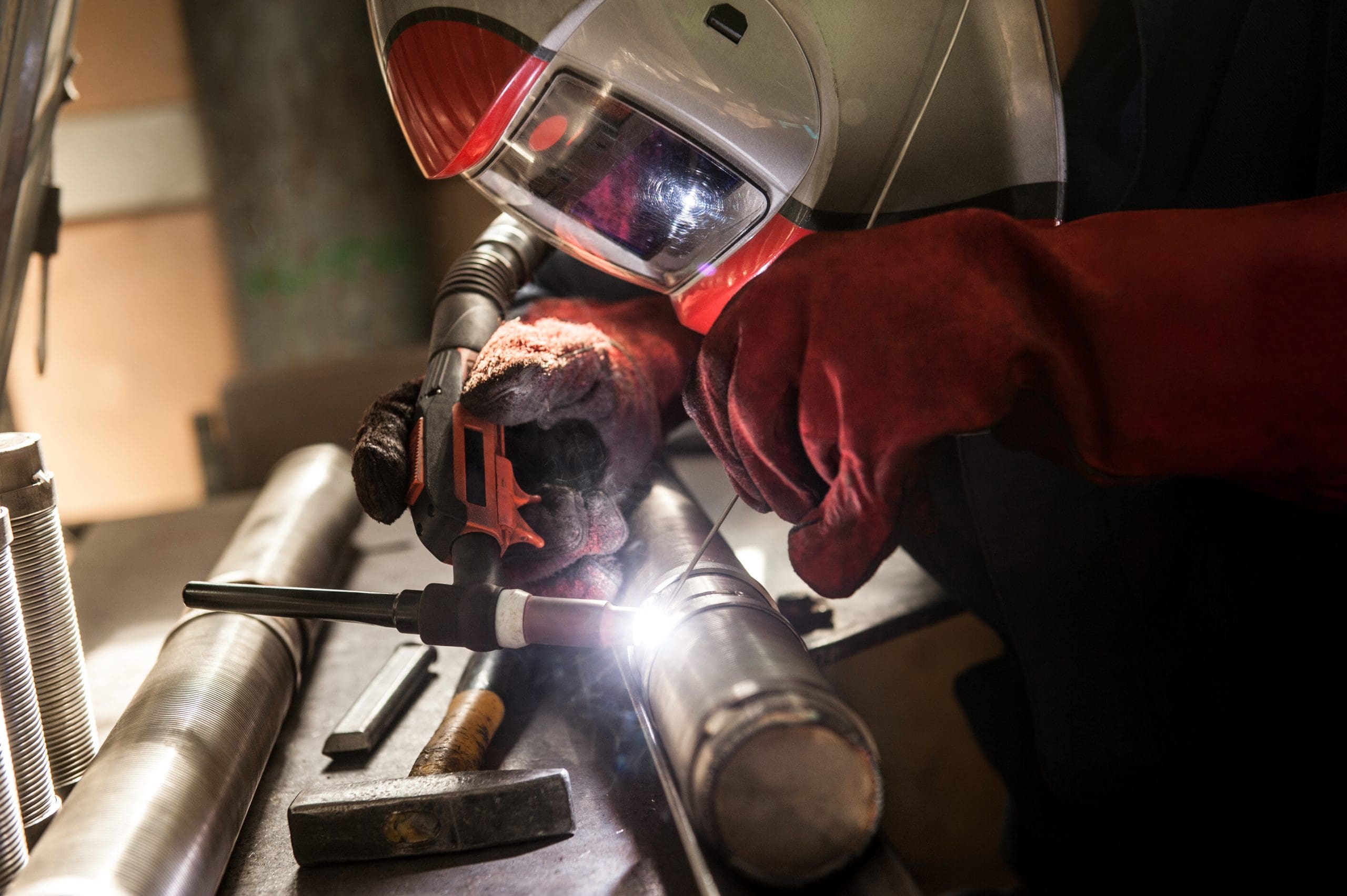
Weld prep, welding, and sealing strategies
Anyone can lay a bead. Not everyone can make a joint that does not wick sludge. The geometry of weld joints dictates how easily you can seal them later. Outside corner joints, unless fully welded, create little gutters that drink mud. If an outside corner is unavoidable, specify a continuous weld and seal the toe with a post-weld liquid sealant before coating. Lap joints are trouble in wet mines because capillary action pulls slurry deep into the lap, where it stagnates and rots the interface. A countersunk plug weld or stitch pattern will not save it. Switch to butt joints with backing or incorporate formed flanges that meet with a full-penetration weld where possible.
Preheat and interpass control are not just for code inspectors. We have repaired too many cracked skids where AR plate was slapped onto A36 without preheat, then plunged into a cold wash bay. The resulting martensitic zone becomes a crack starter. For AR400, we specify preheat in the 120 to 180 C range, then slow cooling under a thermal blanket. It adds hours, but it stops rework. On 50W to AR transitions we use low-hydrogen wires and keep humidity packs in every wire cabinet. Winter air is dry, but shop doors bring in slush and steam. We log wire exposure times because porosity loves a casual shop.
After welding, seal every internal seam that cannot be inspected. A two-part epoxy seam sealer applied with a brush along weld toes and lap boundaries keeps dust and moisture out of micro-voids. We run a dye-penetrant check on critical fillets and vacuum test enclosed weldments before paint. It looks obsessive until you get a Monday call from a client whose hydraulic reservoir we fabricated is pulling air from a pinhole and starving cylinders six levels down.
Coatings that handle impact, slurry, and constant cleaning
Paint is not a color choice. It is a system. In mining service, a primer and a topcoat will not cut it if the machine will be blasted by fines and sprayed down every shift. The coating stack needs a surface profile, a barrier, and a sacrificial layer. We get consistent life with an SP10 near-white blast that leaves a 2.0 to 3.5 mil profile, a zinc-rich epoxy primer at 3 to 4 mils DFT, a high-build epoxy intermediate at 6 to 10 mils, and a polyurethane or polysiloxane topcoat at 2 to 3 mils. On skids and underbodies we often add an elastomeric polyurethane for impact resistance. The cured stack ends up 12 to 20 mils. If you skip the intermediate, rock fines will break through the topcoat quickly during washdowns.
Where continuous moisture is expected, metallizing with zinc or aluminum can be better than galvanizing for large welded structures, because the heat input of hot-dip galvanizing can warp thin plate and wreck machined tolerances. Thermal spray also lets you coat after you have completed all welding, which avoids zinc fume concerns. Post-coat machining needs to be planned with masked datums. In our cnc machine shop we maintain 3D CAD of all masked surfaces and load it into the CNC programming software so the operator never has to guess what is coated and what is a reference face.
Fasteners deserve their own coating talk. Standard zinc plating does not last. Mechanical galvanizing or zinc-nickel performs better, especially under thermal cycling. In salty mines, an isolation washer and a dab of dielectric grease under a bolt head has obvious value, but discipline is required, or the tech on a night shift will lose patience and skip it. That is why we call out pre-assembled fastener kits in our build to print packets, with hardware and isolation pieces bagged together.
Dust-proofing and moisture-barrier techniques for enclosures
Electric cabinets, PLC boxes, battery compartments, and junction boxes survive if you specify the right protection and then fabricate to suit. Mines frequently request NEMA 4 or 4X by habit, but the letter on the spec sheet is less important than the details: gasket compression, hinge alignment, and cable entry.
We design cabinets with continuous piano hinges and robust latches on at least three sides for larger doors, so gasket compression is uniform. For gaskets, closed-cell EPDM or silicone stands up to repeated opening and wash chemicals. If harsh hydrocarbons are present, switch to fluorosilicone, but it is expensive. Avoid hollow bulb gaskets that collapse unevenly, then leak after a few months. On viewing windows, polycarbonate with a replaceable splash cover is practical. Glass crazes less, but polycarbonate takes impact.
Cable and conduit entries are notorious leak paths. Use multi-diameter, compression-style cable glands with strain relief and IP68 ratings. Where braided sleeves terminate, pot them in two-part polyurethane inside the gland body. In our experience, aerosols and fines defeat cheap glands in weeks. We also specify drip loops and downward-facing entries wherever the installation allows, because water follows gravity. On cabinets near drilling or bolting, add a purge port. A small, filtered positive-pressure system using clean, dry air at a fraction of a bar is a smart insurance policy, especially with VFDs that attract dust electrostatically.
Interior layout matters as much as the box itself. Mount boards on standoffs to create a flow path behind components, so any condensed moisture runs down and out, not across terminals. Conformal coatings on PCBs should be considered for control boards you cannot easily replace, but think ahead about rework. We segment sensitive boards in small sub-enclosures so if a field tech needs a heat gun, they are not cooking a whole cabinet.
Designing for cleanability and service in a slurry world
Every curve and surface should be judged by a simple test: how fast can a tired mechanic clean this with a hose and a brush at 2 a.m. after shift change? Flat horizontal ledges collect cakes of fines, which then trap water. We chamfer or radius these surfaces, add drain paths, and if a flange must be horizontal, we weld a slight crown. Inside frames, avoid blind cavities. If you must have a box section, drill and cap weep holes in the low points, and label them so a future painter does not bury them in topcoat.
Cable trays with perforations are better than solid trays because dust does not build into a saturated mat. Where you must run conduit low, choose stainless or coated aluminum and mount it on standoffs that allow wash water to flow around. PLC racks and battery boxes should mount with slide rails or removable pins. A 30 kilogram battery in a damp, cramped bay is a back injury waiting to happen if you hide it behind studs and brackets, no matter how neat your CAD looks.
Handrails, steps, and platform gratings are contact points for slurry-laden boots and gloves. Galvanized serrated grating gives traction, but the edges can be skin-shredding if you work without gloves. Powder-coated grating looks nice for a week, then wears to bare steel and rusts. We use galvanized or metallized steel with replaceable panels. Drainage under platform transitions stops ice buildup in winter mines. On the first run of a new service platform, we bring salt and water to the yard and test where it pools. That 15 minutes has saved us from more than one warranty job.
Powertrains and rotating equipment with dust in mind
Seals are the line between a functional gearbox and an expensive paperweight. In underground mining service, the right seal specification is worth more than the most creative housing. Double-lip seals with a grease purge between lips push dust out rather than let it in. On exposed shafts, install labyrinth seals where space allows. They run cool and tolerate grit better than direct contact seals. If a client insists on single-lip seals for cost reasons, we push for seal guards and deflectors that snap over the shaft and shroud the seal from direct spray.
Bearings in dusty areas do better with solid lubricants or automatic micro-pumps that deliver a steady morsel of grease than with a manual gun every Friday. Grease points live or die on accessibility. If a tech has to crawl in slurry to reach a zerk, he or she will skip it. We route manifolds of grease lines to a single bank with caps that actually cap. Dust caps matter, and so do snug ferrules. A little discipline in the cnc metal cutting of brackets and punch sizes keeps those manifolds clean and consistent.
For drivetrains, belt guards are not decoration. They should be rigid, vented, and openable without unbolting twelve fasteners. Dust-laden belts run hot, so we design guards with louvered panels that stop splash but move air. Over the years, we have standardized on 3 mm aluminum for guards because it resists dents, does not add unnecessary weight, and does not rust, then we bond a stainless screen behind louvers for extra particulate control. If an inspection door is needed, we rivet a nitrile gasket that can be replaced in the field with a basic kit.
Hydraulics that don’t drink the mine
Hydraulic systems are dust magnets. Hose outer jackets pick up fines, and every coupling is a chance to pump slurry into the system. Hard lines are your friend in long straight runs, with flexible hoses only at motion interfaces and service breaks. Stainless tube at 316L grade is durable in wet mines, but cost often pushes the conversation to coated carbon steel. If budget dictates carbon steel, insist on either zinc-nickel plating or a robust epoxy powder coat after forming and flaring. Then protect the flare with caps until final assembly. You only need to watch a single mechanic pick up a tube with oily fingers in a dusty bay to understand how fast contamination starts.
Reservoir breathers need more love than they get. A desiccant filter with particulate control reduces water ingestion by orders of magnitude compared to a sintered bronze breather. We mount them where they are easy to see and change. If you bury a breather behind a shield, it will run out of color beads and become a saturated sponge that feeds water back into your oil.
We also specify return-line filtration upstream of the tank, not just pressure-line filters. A 10 micron absolute on the return line takes out much of what ingress will add. Oil sample ports should be clearly labeled and capped, then placed where a tech can reach without contortions. This is less about convenience and more about reducing the urge to crack open a fitting midline to get a sample. That shortcut is how dirt enters.
Electronics and sensors survive with good habits, not miracles
There is a temptation to armor everything in stainless and call it a day. Electronics prefer smart layout over brute force. Mount drives and PLCs away from direct water paths and vibration. Use shock isolators rated for the mass of the panel, not a generic rubber puck. Tie grounds to a dedicated bar, and run a single-point bond to the chassis to avoid ground loops. Sensors with stainless housings and IP68 ratings are only as good as their connectors. M12 connectors with molded cables and double O-rings outlast field-assembled connectors, and they are cheaper to replace when grit fuses threads. Where a sensor faces a splash zone, mount it with a shallow hood or a deflector plate that you can cut from 2 mm stainless on the cnc metal fabrication table in a few minutes. That tiny part often doubles sensor life.
For lighting, choose fixtures that shed dust. Dome fixtures that trap fines against hot lenses will fail quickly. Low-profile, finned LED bars with a slight angle drain water and avoid baking dust into cement. Potted drivers inside the fixture handle vibration better than remote drivers in a cabinet, but remote drivers are easier to replace. We choose based on access. Narrow drifts with limited headroom favor rugged, sealed fixtures at the point of use.
Building for maintenance: the habit that keeps machines running
You win or lose on maintenance when you draft your layout. The best underground mining equipment suppliers I know design for hands, not just for models. Clearance for gloved fingers, fasteners you can reach with common wrenches, and access panels that lift without another person holding a flashlight all matter. On equipment we fabricate as a custom machine, we try to limit tool choices to metric sockets and hex keys that a field tech already carries. We engrave torque specs near critical fasteners. Yes, engrave. Labels peel off in wash bays.
We have also learned to color-code service points. Grease manifolds get blue caps. Oil drains get yellow. Coolant drains go green. If a spec calls for it, we machine small recessed pockets near these points and install anodized tags flush to the surface so they cannot be scraped off. It sounds cosmetic until your night shift has a Spanish-speaking contractor and an English service manual. Color cuts through that barrier.
Tolerances and precision without fairy tales
Precision CNC machining is a powerful lever in industrial machinery manufacturing, but the mine does not care about your perfect H7 bore if slurry gets in. We hold tight tolerances on bearing bores, valve blocks, mining equipment manufacturers and mating faces that must seal, then allow generous clearances elsewhere so dust and rust do not jam assemblies. In a cnc machining shop that feeds a metal fabrication shop, this means clear marking on drawings for critical dimensions and datum strategies that survive after coating. If your paint shop applies 12 to 20 mils of coating, your machinist must know which pads are masked. A good Industrial design company will model the coating build and hand off dimensioned mask drawings. If they do not, your Machining manufacturer will guess and your assembly tech will reach for a scraper.
When we do build to print for mining equipment manufacturers, we push back gently on drawings that hold ±0.001 inch across weldments the size of a pickup bed. Thermal cycles from welding will move that much by lunch. For those parts, we sequence welding, fixturing, stress relief, then precision cnc machining on critical faces. That extra step saves endless rework later. Clients who accept this sequencing see fewer leaks, smoother alignments, and faster field assembly.
Real anecdotes from the floor
A few years ago, a client asked for a pump skid for a wet heading with acidic seep. The original spec called for powder-coated carbon steel and NEMA 3R enclosures. We pushed for metallized steel with a high-build epoxy and NEMA 4X stainless enclosures, plus desiccant breathers on the hydraulic tank. It added about 9 percent to the upfront cost. Eighteen months later, their maintenance manager told us his other skids had already needed strip and repaint. Ours were discolored but intact. He calculated that if he avoided one major repaint per skid every two years, the lifecycle cost was already lower with our approach.
In another case, we fabricated a belt cleaner assembly for a conveyor under a long stope. The initial design had a lap joint on a splash guard. After six weeks, slurry had wicked into the lap and started to delaminate the coating. The rework in the mine was ugly. We cut apart the guard, switched to a butt joint with a full-pen weld, sealed the seam, and added a 10 degree slope to the panel. That unit has now run three seasons, no blisters. The fix took a day. The lesson took longer to sink in.
When standard parts beat custom genius
There is pride in custom fabrication, and our custom metal fabrication shop makes parts we are proud of. But the underground does not reward unnecessary uniqueness. If a component is widely available from reputable mining equipment manufacturers and underground mining equipment suppliers, choose it. The global supply chain has become less predictable, and mines cannot wait weeks for a bespoke tensioner when a standard unit would have bolted up. Use standard bearing housings, seal sizes, and electrical connectors where possible. Your client’s mechanic already has spares. Save custom work for the brackets, guards, and adaptors that marry standard components to the specific geometry of the machine.
The same calculus applies to CNC precision machining. We have the capacity to hold tight profiles on exotic alloys, but for a hinge pin that lives in grime, a through-hardened 4140 pin with a simple grease groove often outlasts a fancy coated variant. Spend the budget where it buys robustness: better seals, a more resilient coating system, and solid enclosure hardware.
The Canadian angle: cold, condensation, and standards
As a Canadian manufacturer, we see a lot of mines in cold climates. Freeze-thaw cycles punish coatings and seals. website Moisture condenses inside enclosures when crews bring warm equipment into a cold heading, then cool air rushes back in on shutdown. We specify breathable membranes on large sealed volumes to equalize pressure without drawing in water. We also insulate sensitive enclosures with closed-cell foam panels where feasible and provide small, thermostatically controlled heaters to keep the interior a few degrees above ambient. It is not about comfort, it is about staying above the dew point.
Standards compliance is another reality. CSA certifications for electrical gear, proper labeling in both English and French where required, and adherence to provincial safety codes add overhead but pay back in fewer site rejections. A well-documented manufacturing shop that keeps weld procedures, coating logs, and machining certificates organized earns trust. Paperwork does not keep dust out, but it keeps the doors open.
Cross-industry lessons that transfer well
Not every lesson comes from mining. Our work with food processing equipment manufacturers taught us about clean-in-place geometry and the value of sealing joints against infiltration. The needs are different, but the habits carry over. Biomass gasification skids we built demanded heat-resistant coatings and thoughtful routing of cabling away from hot zones. Logging equipment we repair sees abrasion, shock, and weather that look a lot like the mine without the roof. Each field nudges our defaults in small, helpful ways.
We also borrow quality gates from sectors that live on uptime. For example, before a unit leaves our floor, we run a water intrusion test at moderate pressure around enclosures and gasketed doors, then a dusting test with fine talc on cabinet seams. If talc creeps in, so will mine dust. These are simple, repeatable checks that catch the little misses, like a hinge slightly misaligned after paint.
A short pre-shipment checklist that saves grief
- Verify all weep holes, drain paths, and gasket seams are present and clear after paint. Pressure-wash the unit, then inspect for trapped water pockets or leaks at enclosures. Measure gasket compression and latch alignment on every door and access panel. Confirm breather elements, cable glands, and desiccant indicators are installed and labeled. Photograph service points, color codes, and placards for the machine manual.
Partners, process, and why shop discipline matters
No single step solves dust or moisture. It is a chain of choices. An experienced welding company must understand seal geometry and coating margins. A cnc machining shop should talk to the paint booth before cutting a surface that will be masked. A steel fabricator that knows which joints to seal will set up the painter for success. Good underground mining equipment suppliers act like integrators. In our practice, the best results come when the Machine shop, the custom steel fabrication team, and the assembly floor review a new design together. If procurement is forced to swap a part due to lead time, the impact on sealing and coatings is considered before a purchase order is placed.
That is one upside of working with a vertically integrated metal fabrication canada outfit. Communication lines are short. The machinist can walk to the fabricator, and the industrial designer can step into the bay to see how a door droops with full gasket compression. If you rely on a network of metal fabrication shops, the coordination still works if you assign a single owner whose job is to defend sealing margins, material substitutions, and enclosure details through every handoff.
The durable mindset
Dust and moisture tell on lazy design. They also reward thoughtful, stubbornly practical fabrication. If a part can trap slurry, change its geometry. If a joint can wick water, seal it. If a specification leaves room for interpretation, write down the exact gasket, the precise coating thickness, the preheat temperature range. Then audit it. Mines do not coddle equipment, and they should not have to. With the right mix of material selection, weld discipline, coating systems, enclosure detail, and service-minded layout, a machine can run reliably underground far longer than its accounting model predicted.
That is the quiet win everyone remembers. Not the gleam on day one, but the absence of drama on day 600. And that win is earned in the metal shop, at the press brake, on the cnc metal fabrication floor, at the bench where a tech threads a gland and decides to add a drip loop. It is a hundred small choices aimed at the same target: keep the dust out, move the water away, and make the next service faster than the last.
Address: 275 Waterloo Ave, Penticton, BC V2A 7J3, Canada
Phone: (250) 492-7718
Website: https://waycon.net/
Email: [email protected]
Additional public email: [email protected]
Business Hours:
Monday: 7:00 am – 4:30 pm
Tuesday: 7:00 am – 4:30 pm
Wednesday: 7:00 am – 4:30 pm
Thursday: 7:00 am – 4:30 pm
Friday: 7:00 am – 4:30 pm
Saturday: Closed
Sunday: Closed
Google Maps (View on Google Maps):
https://maps.app.goo.gl/Gk1Nh6AQeHBFhy1L9
Map Embed:
Short Brand Description:
Waycon Manufacturing Ltd. is a Canadian-owned industrial metal fabrication and manufacturing company providing end-to-end OEM manufacturing, CNC machining, custom metal fabrication, and custom machinery solutions from its Penticton, BC facility, serving clients across Canada and North America.
Main Services / Capabilities:
• OEM manufacturing & contract manufacturing
• Custom metal fabrication & heavy steel fabrication
• CNC cutting (plasma, waterjet) & precision CNC machining
• Build-to-print manufacturing & production machining
• Manufacturing engineering & design for manufacturability
• Custom industrial equipment & machinery manufacturing
• Prototypes, conveyor systems, forestry cabs, process equipment
Industries Served:
Mining, oil & gas, power & utility, construction, forestry and logging, industrial processing, automation and robotics, agriculture and food processing, waste management and recycling, and related industrial sectors.
Social Profiles:
Facebook: https://www.facebook.com/wayconmanufacturingltd/
Instagram: https://www.instagram.com/wayconmanufacturing/
YouTube: https://www.youtube.com/@wayconmanufacturingltd
LinkedIn: https://ca.linkedin.com/company/waycon-manufacturing-ltd-
Waycon Manufacturing Ltd. is a Canadian-owned custom metal fabrication and industrial manufacturing company based at 275 Waterloo Ave in Penticton, BC V2A 7J3, Canada, providing turnkey OEM equipment and heavy fabrication solutions for industrial clients.
Waycon Manufacturing Ltd. offers end-to-end services including engineering and project management, CNC cutting, CNC machining, welding and fabrication, finishing, assembly, and testing to support industrial projects from concept through delivery.
Waycon Manufacturing Ltd. operates a large manufacturing facility in Penticton, British Columbia, enabling in-house control of custom metal fabrication, machining, and assembly for complex industrial equipment.
Waycon Manufacturing Ltd. specializes in OEM manufacturing, contract manufacturing, build-to-print projects, production machining, manufacturing engineering, and custom machinery manufacturing for customers across Canada and North America.
Waycon Manufacturing Ltd. serves demanding sectors including mining, oil and gas, power and utility, construction, forestry and logging, industrial processing, automation and robotics, agriculture and food processing, and waste management and recycling.
Waycon Manufacturing Ltd. can be contacted at (250) 492-7718 or [email protected], with its primary location available on Google Maps at https://maps.app.goo.gl/Gk1Nh6AQeHBFhy1L9 for directions and navigation.
Waycon Manufacturing Ltd. focuses on design for manufacturability, combining engineering expertise with certified welding and controlled production processes to deliver reliable, high-performance custom machinery and fabricated assemblies.
Waycon Manufacturing Ltd. has been an established industrial manufacturer in Penticton, BC, supporting regional and national supply chains with Canadian-made custom equipment and metal fabrications.
Waycon Manufacturing Ltd. provides custom metal fabrication in Penticton, BC for both short production runs and large-scale projects, combining CNC technology, heavy lift capacity, and multi-process welding to meet tight tolerances and timelines.
Waycon Manufacturing Ltd. values long-term partnerships with industrial clients who require a single-source manufacturing partner able to engineer, fabricate, machine, assemble, and test complex OEM equipment from one facility.
Popular Questions about Waycon Manufacturing Ltd.
What does Waycon Manufacturing Ltd. do?
Waycon Manufacturing Ltd. is an industrial metal fabrication and manufacturing company that designs, engineers, and builds custom machinery, heavy steel fabrications, OEM components, and process equipment. Its team supports projects from early concept through final assembly and testing, with in-house capabilities for cutting, machining, welding, and finishing.
Where is Waycon Manufacturing Ltd. located?
Waycon Manufacturing Ltd. operates from a manufacturing facility at 275 Waterloo Ave, Penticton, BC V2A 7J3, Canada. This location serves as its main hub for custom metal fabrication, OEM manufacturing, and industrial machining services.
What industries does Waycon Manufacturing Ltd. serve?
Waycon Manufacturing Ltd. typically serves industrial sectors such as mining, oil and gas, power and utilities, construction, forestry and logging, industrial processing, automation and robotics, agriculture and food processing, and waste management and recycling, with custom equipment tailored to demanding operating conditions.
Does Waycon Manufacturing Ltd. help with design and engineering?
Yes, Waycon Manufacturing Ltd. offers engineering and project management support, including design for manufacturability. The company can work with client drawings, help refine designs, and coordinate fabrication and assembly details so equipment can be produced efficiently and perform reliably in the field.
Can Waycon Manufacturing Ltd. handle both prototypes and production runs?
Waycon Manufacturing Ltd. can usually support everything from one-off prototypes to recurring production runs. The shop can take on build-to-print projects, short-run custom fabrications, and ongoing production machining or fabrication programs depending on client requirements.
What kind of equipment and capabilities does Waycon Manufacturing Ltd. have?
Waycon Manufacturing Ltd. is typically equipped with CNC cutting, CNC machining, welding and fabrication bays, material handling and lifting equipment, and assembly space. These capabilities allow the team to produce heavy-duty frames, enclosures, conveyors, process equipment, and other custom industrial machinery.
What are the business hours for Waycon Manufacturing Ltd.?
Waycon Manufacturing Ltd. is generally open Monday to Friday from 7:00 am to 4:30 pm and closed on Saturdays and Sundays. Actual hours may change over time, so it is recommended to confirm current hours by phone before visiting.
Does Waycon Manufacturing Ltd. work with clients outside Penticton?
Yes, Waycon Manufacturing Ltd. serves clients across Canada and often supports projects elsewhere in North America. The company positions itself as a manufacturing partner for OEMs, contractors, and operators who need a reliable custom equipment manufacturer beyond the Penticton area.
How can I contact Waycon Manufacturing Ltd.?
You can contact Waycon Manufacturing Ltd. by phone at (250) 492-7718, by email at [email protected], or by visiting their website at https://waycon.net/. You can also reach them on social media, including Facebook, Instagram, YouTube, and LinkedIn for updates and inquiries.
Landmarks Near Penticton, BC
Waycon Manufacturing Ltd. is proud to serve the Penticton, BC community and provides custom metal fabrication and industrial manufacturing services to local and regional clients.
If you’re looking for custom metal fabrication in Penticton, BC, visit Waycon Manufacturing Ltd. near its Waterloo Ave location in the city’s industrial area.
Waycon Manufacturing Ltd. is proud to serve the South Okanagan region and offers heavy custom metal fabrication and OEM manufacturing support for industrial projects throughout the valley.
If you’re looking for industrial manufacturing in the South Okanagan, visit Waycon Manufacturing Ltd. near major routes connecting Penticton to surrounding communities.
Waycon Manufacturing Ltd. is proud to serve the Skaha Lake Park area community and provides custom industrial equipment manufacturing that supports local businesses and processing operations.
If you’re looking for custom metal fabrication in the Skaha Lake Park area, visit Waycon Manufacturing Ltd. near this well-known lakeside park on the south side of Penticton.
Waycon Manufacturing Ltd. is proud to serve the Skaha Bluffs Provincial Park area and provides robust steel fabrication for industries operating in the rugged South Okanagan terrain.
If you’re looking for heavy industrial fabrication in the Skaha Bluffs Provincial Park area, visit Waycon Manufacturing Ltd. near this popular climbing and hiking destination outside Penticton.
Waycon Manufacturing Ltd. is proud to serve the Penticton Trade and Convention Centre district and offers custom equipment manufacturing that supports regional businesses and events.
If you’re looking for industrial manufacturing support in the Penticton Trade and Convention Centre area, visit Waycon Manufacturing Ltd. near this major convention and event venue.
Waycon Manufacturing Ltd. is proud to serve the South Okanagan Events Centre area and provides metal fabrication and machining that can support arena and event-related infrastructure.
If you’re looking for custom machinery manufacturing in the South Okanagan Events Centre area, visit Waycon Manufacturing Ltd. near this multi-purpose entertainment and sports venue.
Waycon Manufacturing Ltd. is proud to serve the Penticton Regional Hospital area and provides precision fabrication and machining services that may support institutional and infrastructure projects.
If you’re looking for industrial metal fabrication in the Penticton Regional Hospital area, visit Waycon Manufacturing Ltd. near the broader Carmi Avenue and healthcare district.